

Same Shift, Different Day
Staying one question deeper

There’s a type of cultural writing that almost always pulls me in.
The piece usually goes something like this: ‘Something that used to be good gets optimized, loses its soul, and then something smaller and more intentional shows up to fill the gap. People want realness again. Here’s the proof.’
It’s usually well written. Solid references, clear examples. And the best ones do something I really appreciate. They point out that this isn’t new. That this cycle has been happening for a long time. That the pendulum always swings.
That’s an honest observation. And it’s where I always want the piece to keep going.
Because naming the cycle is actually the most interesting part. It’s the writer briefly touching something true and then stepping back from it. If this keeps happening over and over, then is this really a cultural shift, or is it just how things work?
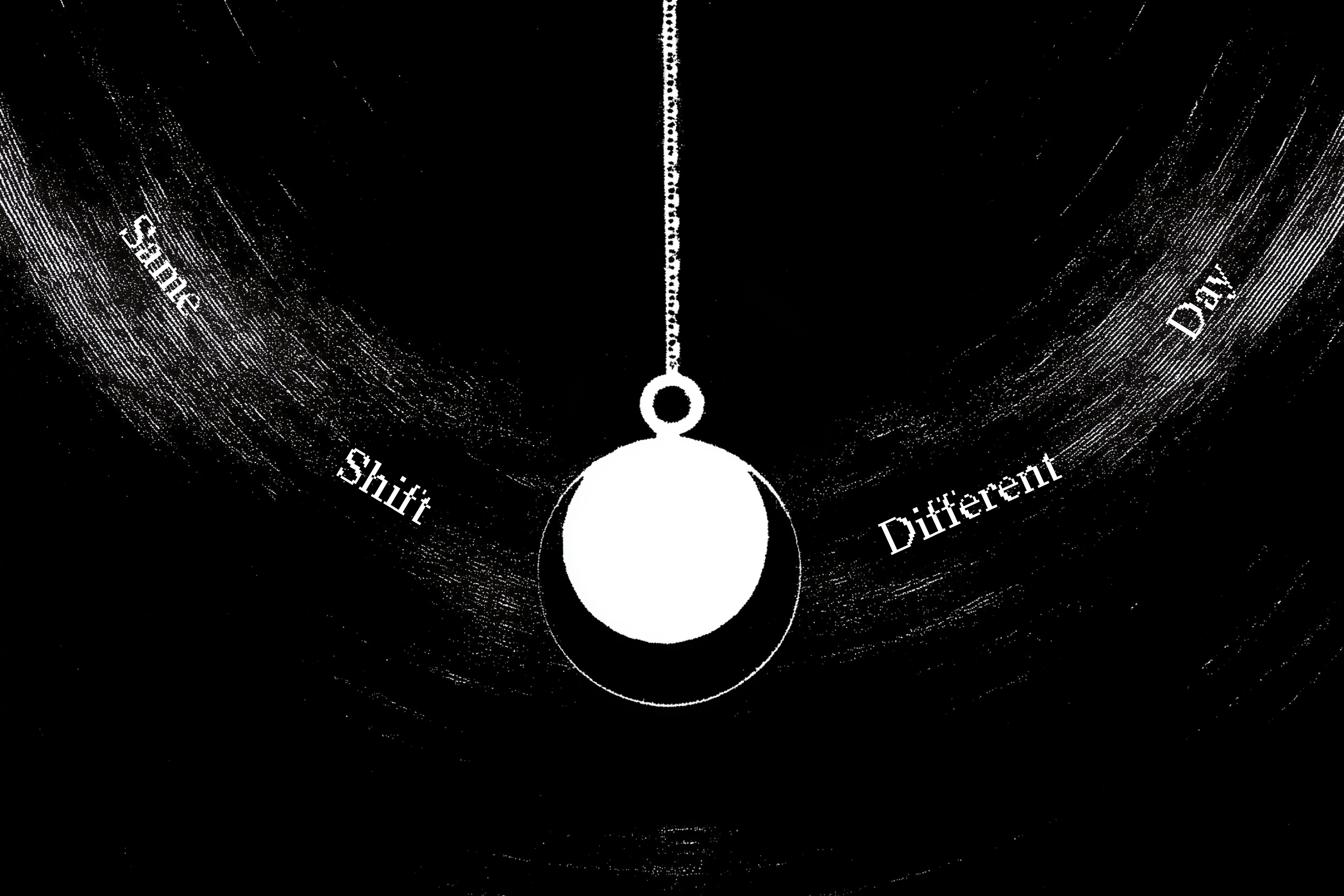
The pendulum doesn’t swing just because people wake up and decide they want something different. It swings because of specific forces pushing it that way. Economic, structural, social, usually some mix of those. Those forces shape what people end up wanting. And they’re different every time, even if it looks similar on the surface.
That’s the question I wish these pieces would stay in a little longer. Not just what’s happening, but why this way, why now. What’s actually different about this moment versus the last time things swung back.
Instead, the piece names the cycle and then keeps going without really digging into it.
Restaurants are a good example.
The surface story is easy. Fast casual scaled on convenience and customization, went public, quality dropped, and now smaller, more focused places are taking share. The takeaway basically writes itself. People are tired of efficiency. They want connection.
Maybe. But that skips over what’s actually going on.
There are at least two different stories happening at the same time.
The first is the venture-backed chain. Take Sweetgreen. They built something genuinely good. Fresh, thoughtful, worth going out of your way for. Then they went public in 2021, and everything that comes with that took over. Prices go up. Quality comes down. They made a big bet on kitchen automation that didn’t really work. They still haven’t turned a profit.
That’s not culture losing its way. That’s what happens when the money has expectations attached to it. Not always, but often enough that you start to see the pattern.
The second story is harder to pin down cleanly. The independent spot with the tight menu and the intimate room. It looks intentional. And sometimes it is. But sometimes it’s just the reality of the situation.
Did it start that way because that was the vision, or because it had to? Is the focus a belief, or just how they have to operate? Is the intimacy designed, or is it just the size of the space and the budget?
A chef might build something tight and specific because they believe constraints make better work. Or because going bigger was never really an option. Both lead to the same result. From the outside, both look like a point of view.
And that distinction matters.
Because if the shift toward smaller restaurants is mostly about financing getting tighter and costs staying high, that’s one thing. If it’s a real shift in how a new generation thinks about hospitality, that’s another.
The trend piece needs it to be the second. It’s probably some mix of both, just weighted differently depending on who you’re looking at.
That’s the part I’m more interested in.
Because “independent restaurants are gaining share” is real. But what that actually means depends on what’s driving it.
I run into a version of this in my own work all the time.
A client comes in with a clear vision. What the brand means, what they want to put out into the world, why it matters. And usually that vision is real. It came from somewhere honest.
But it doesn’t exist in a vacuum. It exists inside a specific moment, specific constraints, specific market conditions.
And sometimes what feels like the “right” expression of that idea doesn’t actually fit the moment it’s entering.
That’s not a failure of the idea. It’s more about timing.
Part of what I’m doing early on is trying to separate those two things. What’s true about the company at its core, and what actually makes sense to do right now.
Those aren’t always the same answer.
A product can be right in terms of what the brand is trying to say, and wrong in terms of when or how it shows up.
The meaning might be real. The timing might not be there yet.
Which is basically the same question the trend piece is circling without quite landing on.
The shift is real. Something is happening. But what’s actually causing it, and what this moment really calls for, those are harder questions. They don’t wrap up cleanly.
But they’re the ones worth staying in.